How AI elevates shared services from cost center to business value engine
For years, shared services organizations have been judged by one primary metric: cost reduction. Lower cost-to-serve. Leaner teams. Standardized processes. Efficient execution.
Those goals still matter. But they are no longer enough.
Today’s CFOs expect financial shared services to deliver more than efficiency. They want speed without risk. Control without friction. Insight without delay. And increasingly, they want shared services to contribute directly to customer experience, cash flow, and enterprise resilience.
Artificial intelligence (AI) is making that shift possible.
When deployed strategically, AI transforms shared services from a transactional back office into a Center of Excellence that optimizes cost, accelerates financial performance, strengthens controls, and improves how internal and external customers experience finance.
This is not a future state.
It is already happening in organizations that treat AI as an operating model, not a tool.
Why the Traditional Shared Services Model Has Hit Its Ceiling
Shared services delivered immense value by consolidating work and standardizing processes. But the traditional model now faces structural limits:
- Transaction volumes continue to rise faster than headcount
- Manual exceptions consume a disproportionate share of effort
- Customer expectations for speed and transparency are increasing
- Compliance and fraud risks are growing more sophisticated
- Talent shortages make labor-based scaling unsustainable
Even well-run financial shared services teams struggle with a reality every leader recognizes: The cost savings from standardization eventually plateau, while complexity keeps rising.
This is where AI becomes essential. Not as incremental automation, but as intelligence embedded across workflows.
AI as the Catalyst for a New Shared Services Mandate
AI enables financial shared services to move beyond efficiency and into value creation.
Specifically, AI allows organizations to:
- Eliminate unnecessary human intervention
- Make decisions in real time
- Learn continuously from outcomes
- Scale without proportional cost increases
- Embed controls directly into workflows
When AI is orchestrated across accounts payable (AP), accounts receivable (AR), and risk management, shared services evolve into a strategic capability, not just a service provider.
This is the foundation of the new Center of Excellence.
AP: From Processing Function to Control and Experience Engine
AP has long been viewed as a cost center that’s measured by invoices processed per full-time equivalent (FTE) and cost per invoice.
AI changes both the economics and the experience of AP.
How AI reshapes AP operations
In Itemize-style AI environments:
- Invoices are ingested from any source and format
- AI extracts and validates data automatically
- Coding decisions are made intelligently based on history and context
- Invoices are automatically matched to purchase orders (POs)
- Exceptions are flagged only when risk or ambiguity exists
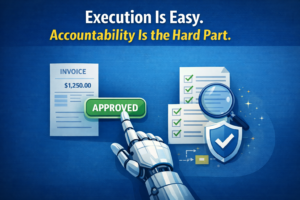
- Payments are released with built-in validation and audit trails
This moves AP from reactive processing to proactive orchestration.
Cost optimization impact
- Higher straight-through processing rates
- Lower cost per invoice even as volume grows
- Reduced need for manual exception handling
- Headcount avoidance as automation scales
Customer experience impact
- Faster invoice approvals and payments
- Fewer supplier inquiries and disputes
- Greater transparency into invoice status
- More predictable payment cycles
AP becomes a trusted, high-performance service, not a bottleneck.
AR: Turning Shared Services into a Cash and Experience Accelerator
AR is where shared services have the greatest opportunity to impact financial performance and customer satisfaction simultaneously.
Traditional AR struggles with:
- Manual cash application
- Slow dispute resolution
- Fragmented customer data
- Inconsistent follow-up
AI removes these friction points.
How AI transforms AR in Shared Services
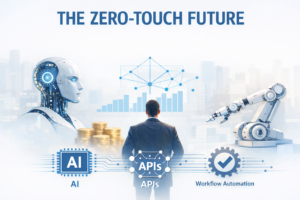
Using AI, APIs, and workflow intelligence:
- Payments are matched to invoices automatically
- Disputes are identified and routed faster
- Collections activity is prioritized by risk and value
- Unapplied cash is reduced dramatically
- Forecast accuracy improves
AI capabilities such as intelligent data extraction, classification, pattern recognition, and anomaly detection extend naturally into AR workflows.
Cost optimization impact
- Reduced manual cash application effort
- Higher collector productivity
- Lower DSO without increasing headcount
Customer experience impact
- Faster issue resolution
- Clearer communication
- Fewer billing disputes
- More predictable interactions
AR shifts from collections-focused to relationship-focused, while still delivering cash results.
Risk Mitigation: From After-the-Fact Control to Embedded Protection
Risk management has traditionally been reactive, relying on audits, reviews, and manual checks.
AI enables a fundamentally different model.
How AI embeds risk mitigation into Shared Services
AI-driven platforms like Itemize:
- Validate invoices, receipts, and documentation in real time
- Detect anomalies and fraud patterns humans miss
- Enforce policies automatically
- Create continuous, searchable audit trails
- Reduce false positives that waste time
Risk mitigation becomes preventative, not detective.
Cost optimization impact
- Lower audit and remediation costs
- Reduced fraud losses and write-offs
- Less rework across AP, AR, and expense
Customer experience impact
- Faster processing without surprise reversals
- Fewer payment errors
- Greater trust in finance operations
Risk controls no longer slow the business, they enable it.
What CFOs Gain From AI-Driven Shared Services
For CFOs, the value of AI-driven financial shared services is clear:
- Lower cost-to-serve without sacrificing quality. AI enables shared services to reduce manual effort and rework while maintaining and often improving accuracy and consistency. Costs decline because intelligence replaces labor, not because quality standards are relaxed. This allows finance organizations to absorb growth without proportional increases in expenses.
- Faster cash flow and improved liquidity. AI accelerates invoice processing, cash application, and dispute resolution across AP and AR. Faster execution shortens cycle times, improves Days Sales Outstanding (DSO), and enhances working capital predictability. The result is stronger liquidity without additional borrowing or operational strain.
- Stronger controls with less friction. Embedded AI-driven validation and anomaly detection enforce policies in real time rather than through after-the-fact reviews. This reduces fraud exposure and compliance risk while eliminating manual checkpoints that slow the business. Controls become invisible but more effective.
- Resilient operations that scale instantly. AI-driven workflows allow shared services to handle volume spikes, acquisitions, and process changes without disruption. Because automation adapts and learns, resilience is built into the operating model rather than dependent on human intervention. Finance operations continue running smoothly even under stress.
- Better customer and supplier experiences. Faster processing, fewer errors, and greater transparency improves how internal and external stakeholders experience finance. Suppliers get paid predictably, customers resolve issues faster, and internal teams gain confidence in shared services delivery. Experience improves as friction disappears.
The result? Financial shared services are a strategic asset, not a cost line item.
How Shared Services Leaders Can Start the Transformation
The most successful organizations follow a clear path:
- Identify high-friction workflows across AP, AR, and expense. Focus on processes with high manual touch rates, frequent exceptions, or recurring delays that frustrate internal and external stakeholders. These workflows often represent the greatest opportunity for AI to remove friction and deliver fast, visible wins. Starting here helps build momentum and credibility for broader transformation.
- Establish baseline metrics for cost, speed, and risk. Document current performance across metrics such as cost per transaction, cycle time, error rates, and exception volumes. Baselines provide the foundation for measuring progress and proving return on investment (ROI) to finance leadership. Without this data, even successful automation can struggle to gain continued support.
- Deploy AI where variability and volume intersect. AI delivers the greatest value in workflows that are both high-volume and highly variable, where rules-based automation breaks down. These are the areas where intelligent decision-making and learning deliver outsized returns. Prioritizing these use cases accelerates time-to-value and maximizes impact.
- Integrate systems via APIs to eliminate handoffs. API-based integration ensures data flows seamlessly between enterprise resource planning (ERP) applications, payment platforms, expense systems, and analytics tools. Eliminating manual handoffs and file-based transfers reduces errors and delays while increasing resilience. APIs also make it easier to adapt as systems and processes evolve.
- Measure and scale proven use cases. Track improvements consistently and use results to guide expansion into additional workflows, regions, or business units. Scaling what works reduces risk and builds confidence across the organization. Over time, this creates a repeatable model for continuous improvement.
This is not about replacing teams.
It’s about freeing them to deliver higher-value outcomes.
The Bottom Line: Shared Services Is Being Redefined
AI is not just improving financial shared services. It is redefining its purpose.
The organizations that embrace AI as an operating model will:
- Reduce costs sustainably
- Improve customer and supplier experience
- Strengthen risk posture
- Elevate shared services into a true Center of Excellence
Those that don’t will find themselves trapped in a model that no longer scales.
AI-driven shared services aren’t just the future of finance operations. They are the future of enterprise value creation.
Discover how Itemize helps shared services leaders automate AP and AR workflows, reduce risk exposure, and deliver a better experience for customers and suppliers, all at scale. Request a conversation to see what AI-driven financial shared services look like in practice.
# # #